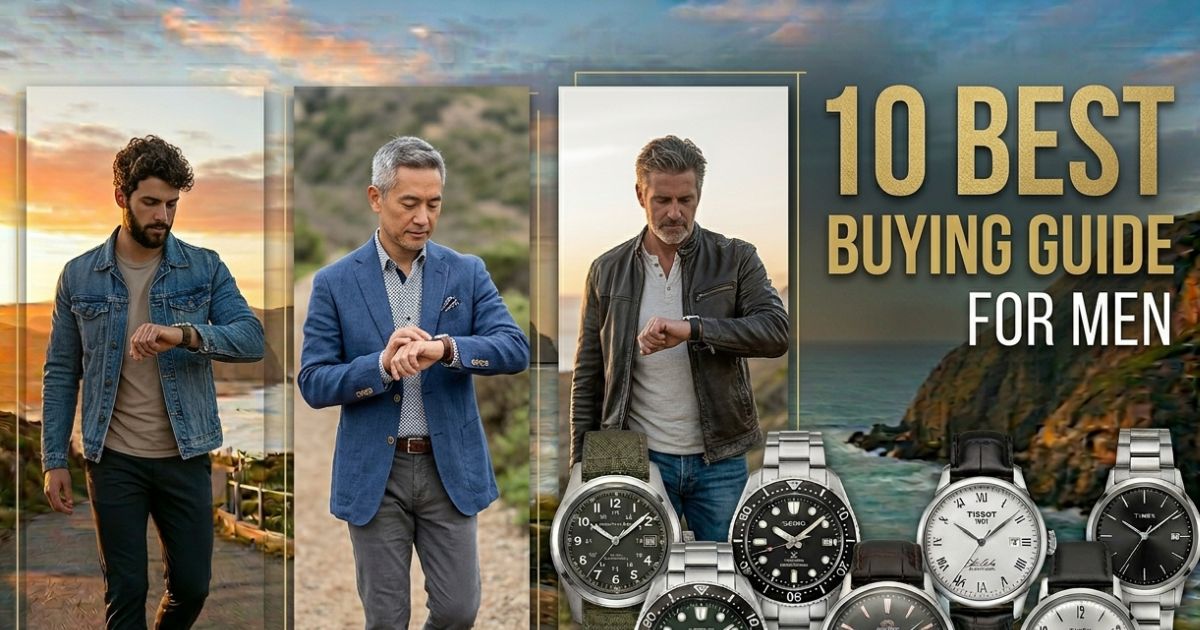

A watch is more than a timepiece it’s a statement of your style and personality. In this watch buying guide for men, we cover how to choose a men’s wrist watch based on occasion and personal taste. You’ll learn key tips on watch styles (dress, sports, casual, etc.), how to pick the best case size and fit for your wrist, and important features to consider (movement, materials, water resistance). Even beginners can follow this guide: by the end you’ll have clear advice for selecting a watch that suits your needs, budget, and wardrobe.
1. Determine Your Style and Watch Type
The first step is to decide why and when you’ll wear the watch. Men’s watches come in many styles. For example:
- Dress watches: Thin cases, simple dials and leather straps; ideal for business or formal events.
- Sports/Dive watches: Rugged build, water-resistant, often with chronographs or rotating bezels; great for casual, outdoor or athletic use.
- Field and Pilot watches: Durable and easy-to-read, with military or aviation-inspired designs.
- Chronographs and Specialty watches: With stopwatch functions or unique designs (racing, nautical, etc.).
In other words, think of the main occasion and style you need. A slim dress watch pairs best with suits, while a bold dive or field watch suits jeans and casual wear. Matching the watch to its purpose (formal vs. casual) will help narrow your choice. In short: How to choose a men’s wrist watch? Start by picking the type that fits your lifestyle and wardrobe.
2. Set a Budget and Research Brands
Before shopping, set a realistic budget. Quality men’s watches come at many price points. Decide how much you’re willing to spend, keeping in mind that higher prices often reflect better materials, movements, and craftsmanship. Do some research on reputable brands in your range. For example, popular entry-level watchmakers like Seiko, Citizen or Tissot offer quality on a budget. If you’re interested in luxury or unique styles, research those brands’ reputations as well. Reading reviews and forums can help identify reliable brands and models. In our watch buying guide for men, we stress that informed buyers get the best value – so look up brand histories, customer feedback, and warranty/after-sales service.
3. Choose the Right Movement and Features
Next, decide on watch movement and features. The main options are:
- Quartz (battery-powered): Highly accurate and low-maintenance. Quartz watches are usually more affordable and precise. Common beginner watches (Timex, Casio, etc.) use quartz.
- Automatic (self-winding mechanical): Powered by your wrist’s motion; no battery needed. These showcase traditional craftsmanship and are prized by enthusiasts. They require some maintenance (periodic servicing) but offer a classic appeal.
- Mechanical (manual-wind): The oldest style, fully mechanical and hand-wound. Enthusiasts appreciate the intricate engineering, though they require daily winding.
Also consider features like complications (date, chronograph stopwatch, moonphase, etc.) and display (analog vs digital). Dress watches often have simple dials (Arabic or Roman numerals), while sports watches might include extra hands or digital displays. In short, think about what functions you need: if you just need time and date, a simple automatic or quartz will do. If you want a sporty chronograph or a smartwatch with fitness tracking, factor those in. Remember: choosing between quartz and mechanical is a personal preference, not a right-or-wrong decision.
4. Pick Case Material and Strap
The case material affects durability and look. Common options:
- Stainless steel: Durable, corrosion-resistant, classic for men’s watches. Most sport and dive watches use steel.
- Titanium: Very strong and lightweight, good for large watches or metal bracelets.
- Gold or Platinum: Luxurious and hefty; used in high-end dress watches.
- Wood or Ceramic: Unique, often eco-friendly or scratch-resistant; for a distinctive style.
Similarly, choose a strap/bracelet that fits your style and use:
- Leather straps: Versatile and comfortable; great for dress or casual wear. Match leather color to your shoes/belt for a coordinated look.
- Metal bracelets: Durable and often used in sports or luxury watches (e.g. dive watches). Steel or titanium links look sleek with casual or business attire.
- Rubber or Nylon: Practical for sports/diving or a modern casual look. They’re water-resistant and comfortable for active use.
- Wooden straps: (in wood watches) give a unique, natural look and are eco-friendly.
Choose materials based on comfort and matching with your clothing. For example, a black leather strap goes well with black shoes or belt. Metal color (silver, gold, black) should coordinate with other accessories like belt buckles or cufflinks.
5. Ensure the Right Fit: Comfort and Placement
A well-fitting watch looks and feels better. First, wear the watch on the wrist that’s most comfortable. Traditionally, men wear a watch on the non‑dominant wrist (left wrist for right-handers) so it doesn’t interfere with tasks. However, personal style choices may vary.
Strap fit: Aim for snug but not tight. You should be able to slide one finger under the strap. Too loose, and the watch will slide around and look sloppy; too tight, and it’s uncomfortable and can pinch. A good test from style guides is:
- One-finger rule: One finger should slip comfortably under the strap.
- Centering: The watch face stays centered on your wrist, not spinning or sliding.
- No gaps: The case back should sit flush against your wrist, not tilted or floating.
For dress watches, make sure the case is thin (often <11mm) so it slides under a shirt cuff easily. Sportier or dive watches tend to be thicker for durability, which is fine for casual wear. In short: a well-fitted watch “should feel like a natural extension of your wrist, not an afterthought”.
6. Watch Size Guide: Choose the Best Size for Your Wrist
Finding the right case size is crucial. Case diameter (the width of the watch face) should match your wrist circumference. As a rule of thumb:
- Small wrists (under 15–16cm circumference): Choose a case around 34–38mm.
- Average wrists (15–17cm): A case between 38–42mm usually fits well.
- Large wrists (over ~17cm): You can go 42mm and above safely.
Another tip from style experts: the watch should not hang past the sides of your wrist. In other words, the lug-to-lug width (end of one strap attachment to the other) should fit comfortably within your wrist’s width.
Quick size-check steps:
- Measure your wrist with a tape or string.
- Compare that to watch case diameter. (36–40mm fits most 15–17cm wrists.)
- Consider case thickness: ≤11mm is generally dressy (slides under cuffs), while thicker cases look more casual/sporty.
- When in doubt, remember the old rule: “Match the watch to your wrist, not the other way around.” A watch too large will overwhelm a small wrist. A too-small watch can look like a toy.
7. Match Your Watch to Your Outfit: Style Tips for Men
How you wear the watch is as important as which watch you choose. Style guides emphasize coordinating your watch with your outfit and occasion. Key tips:
- Formality: Pair a slim leather dress watch with suits and formal events. Wear sportier metal/chronograph watches with casual outfits like jeans or chinos. For example, don’t pair a chunky diver with a tuxedo, or a delicate dress watch with shorts.
- Colors and Metals: Match your watch’s metal (silver, gold, black, etc.) to other accessories. Leather strap color should coordinate with your belt and shoes. For instance, a brown leather strap looks best with brown dress shoes.
- Non-dominant Wrist: Many style experts note that most men wear their watch on the non-dominant wrist for comfort, though this can be a personal choice.
- Avoid Clutter: If you wear bracelets, keep them to two or three simple pieces that complement your watch. Stacking too many bracelets can distract from the watch (and risk scratches).
By matching the watch to your clothes and using accessories sparingly, your watch will enhance your look rather than clash. As one guide summarizes: “Match watch formality to your outfit: use a slim dress watch for suits and formal occasions, and sport or diver watches for casual looks”.
8. Personalize and Accessorize Wisely
Once you have the basics, you can add personal flair. Many watches allow strap changes, so you can personalize the look. For instance, swap a metal bracelet for a leather strap for a more formal look, or add NATO/rubber straps for a sportier vibe. Custom touches (like engraved casebacks or unique dial materials) can make a watch feel truly yours. For example, a wooden-dial watch pairs well with earthy tones in casual outfits.
If you like stacking bracelets, follow these minimalist rules: match materials to your watch (leather beads with a leather strap), limit to 2–3 pieces, and leave a bit of space so each stands out. Remember, the watch should remain the focal point. As style pros say, “Stacking should enhance your watch, not compete with it”.
9. Try It On, Read Reviews, and Check Warranty
Before purchasing, try on the watch if possible. Feeling it on your wrist is the best way to judge comfort, size, and appearance. In-store try-ons or online videos can help. Always verify return policies if buying online, in case it doesn’t fit as expected.
Also, do your homework: read customer reviews and watch forums for feedback on the model you like. Reviews often reveal issues with durability, comfort, or accuracy you won’t see in specs. Check that the retailer is authorized and that the watch comes with proper warranty and certificates of authenticity. This is especially important for higher-end watches. A good warranty gives peace of mind, and a reputable dealer reduces the risk of counterfeits.
Finally, ensure the watch’s features match your needs. For example, if you swim or shower with your watch, verify its water resistance rating (measured in meters or ATM). Otherwise, everyday splashes could damage it.
10. Maintenance and Long-Term Considerations
Think of your watch as an investment. Some watches (especially mechanical ones) require periodic servicing to keep running. Quartz watches generally need only occasional battery changes. Ask about maintenance schedules: a fully mechanical watch might need a service every 3–5 years.
Also plan for long-term care: avoid extreme temperatures, keep leather straps away from water, and store the watch in a safe place when not wearing it. If you’ll wear it daily, consider insuring it or registering it if valuable.
Above all, choose a watch you’ll enjoy wearing long-term. The best timepiece is one that reflects your personality and fits your life. Whether your first watch or your tenth, use this guide’s tips to make a confident choice. Remember: a watch is a lasting accessory pick one that feels right for you now and grows with your style.
Conclusion: A great men’s watch combines style, fit, and quality. By determining the right style, setting a budget, and carefully checking size and features, you can navigate any men’s watch buying guide confidently. Use these watch buying tips to find a timepiece that matches your outfit, feels comfortable, and will last for years. Ready to make your choice? Use this guide as your checklist when shopping, and you’ll end up with a watch you’ll love wearing.
