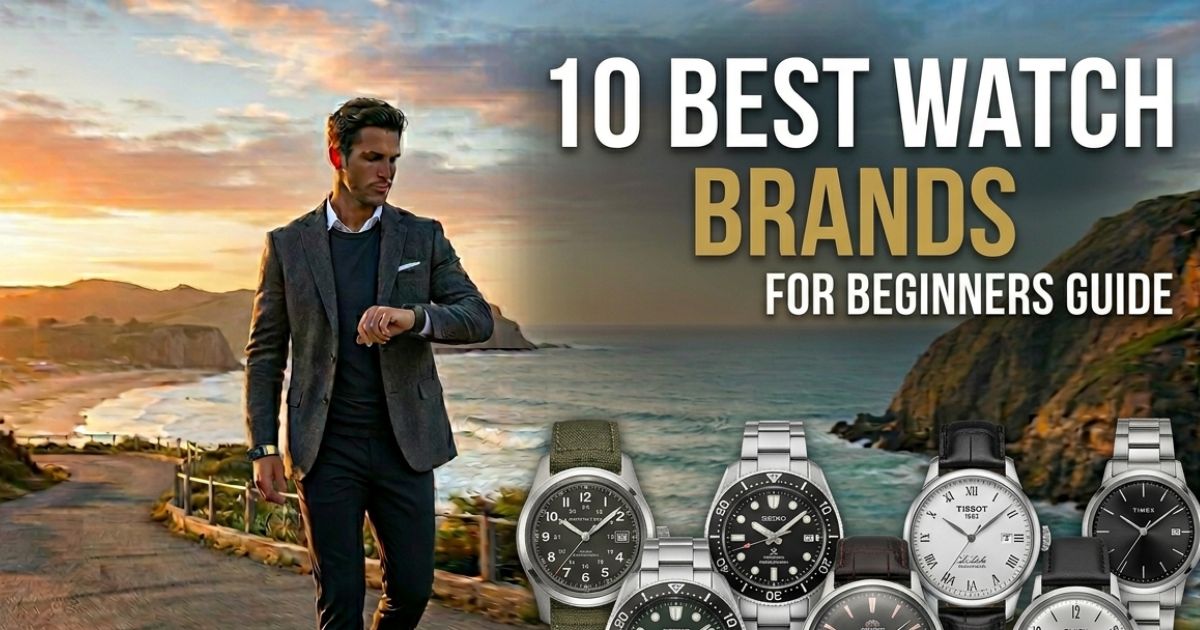

Starting a watch collection is exciting but can be overwhelming. In this watch brands beginners guide, we highlight 10 of the best entry-level watch brands that balance quality, style, and affordability. From simple watches for beginners to versatile everyday models, these brands are known for offering durable, easy-to-use timepieces at reasonable prices. You’ll learn what to look for (movement types, materials, price range) and get brand-by-brand pros/cons and tips. Whether you want an affordable wrist watch for daily wear or a classic mechanical timepiece, this guide will point you to the top starter watch brands ideal for new collectors.
What Makes a Good Beginner Watch?
Before diving into brands, it helps to know key criteria for entry-level watches:
- Affordability: Look for brands with quality models typically ranging from ~$50 to a few hundred dollars. (These 10 brands all offer many watches under $500.)
- Durability & Reliability: Beginner watches should be robust and low-maintenance. Quartz (battery-powered) watches are very accurate and require minimal care, making them great first watches. Mechanical or automatic watches (which wind themselves from motion) are charming and educational for enthusiasts, but they require occasional servicing.
- Simple, Versatile Design: Clear dials and classic styles help ensure the watch suits various outfits and occasions. Classic dial layouts (stick indices, easy-to-read hands) are best for starters.
- Brand Reputation: Established watchmakers often guarantee better build quality and customer support. The brands below are well-known for consistent quality, even in their budget lines.
Choosing a first watch involves balancing personal style with these practical factors. With that in mind, let’s look at each of the 10 brands we recommend for beginners.
Seiko – Renowned Japanese Craftsmanship
Seiko, founded in Tokyo in 1881, is one of the world’s most recognized watchmakers. It introduced the first quartz wristwatch (1969) and is one of only two vertically integrated watchmakers (along with Rolex). For beginners, Seiko is celebrated for exceptional build quality at accessible prices. Seiko offers both quartz and mechanical movements, so you can start with a simple battery-powered model or step up to an automatic. Popular entry-level Seiko models include the Seiko 5 series (robust automatic field watches) and the Prospex dive watches (like the SKX007) which many consider the best budget divers. Even Seiko’s dressier Presage line (with enamel dials) offers Swiss-like finesse in affordable packages.
- Key Features: In-house manufacture (all components made by Seiko); wide style range (divers, field watches, dress); known for reliability and accuracy.
- Example Models: Seiko 5 (SNK series), SKX007/SKX009 divers, Seiko Presage Cocktail Time, Seiko Prospex Turtle.
- Pros: Excellent value great quality for the price. Entry-level models often start under $200. Very dependable movements and solid workmanship. Seiko is praised as “one of the most underrated watch manufacturers” in the sub-$2,000 category.
- Cons: Some Seiko models are plain-looking (they favor function). Discontinued cult models (e.g. SKX007) can be hard to find new. Automatic movements may run a few seconds fast/slow per day (but still within norms for their cost).
Tip: The Seiko 5 series (named for five key features like day/date and water resistance) is a classic first mechanical watch series. The new Seiko 5 Sports line (SRPD series) revives this spirit with updated designs. Seiko’s quartz models (V157 caliber and others) are also excellent picks for those who prefer minimal maintenance.
Citizen – Innovative Eco-Drive Technology
Citizen is another top Japanese watch brand (founded 1918) known for innovation. It pioneered solar-powered quartz technology: its Eco-Drive system (introduced in 1995) conceals a solar cell under the dial so the watch never needs a battery change. For beginners, Citizen offers a huge range of styles (dress, sport, dive, aviation) mostly in quartz and Eco-Drive. Citizen also owns Bulova and makes movements for many brands (via Miyota), so their build quality is reliable.
- Key Features: Eco-Drive solar power (light-charging); quartz precision; wide variety including dive and pilot watches.
- Example Models: Citizen Eco-Drive Divers (e.g. Promaster series), Nighthawk (pilot), Chandler/Eco-Drive Quartz, bulletproof quartz sports watches.
- Pros: Very low maintenance – no battery changes (Eco-Drive). Mostly solar or quartz so they keep excellent time. Affordable – many models are $100–$300. Robust stainless steel cases and decent water resistance.
- Cons: Designs are sometimes conservative, and fewer mechanical (automatic) options. Eco-Drive watches need occasional exposure to light or they stop – but they store charge for months.
Tip: Citizen’s Eco-Drive watches are ideal for first-timers who want “set it and forget it” convenience. The Promaster Diver series (professional-grade dive watches) is a top seller for entry-level divers. Citizen also makes some automatic watches (e.g., NH8350), but its reputation is strongest in quartz/solar.
Casio – Durability and Digital Innovation
Casio, founded 1946, is a Japanese electronics giant famous for its durable, functional watches. It popularized digital technology in wristwatches (first Casio “Casiotron” digital watch in 1974) and is best known today for the G-Shock line (launched 1983). G-Shocks are virtually shockproof and often 200m water-resistant, designed for sports/military use. Casio also makes classic digital analogs (like the iconic F-91W – one of the world’s best-selling digital watches).
- Key Features: Extremely durable construction (resin cases, shock absorption); digital features (alarms, chronographs, timers, world time); solar and Bluetooth models in some G-Shocks.
- Example Models: Casio F-91W (super affordable LCD digital, ~$20), Casio G-Shock DW-5600 series, GA-2100 “Casioak”, and Casio Pro Trek (outdoor watches with sensors).
- Pros: Outstanding toughness – can withstand impact, scratches, water. Very affordable: many Casio analog/digital models are under $100. Battery life is long (some solar). Great for tech-minded beginners (digital readouts, multifunction).
- Cons: Bulkier and more “sporty” looks may not suit formal wear. Plastic build can feel cheap on high-end models. Some G-Shocks with advanced tech are pricier ($200–$500).
Tip: If you want a watch you can’t break, Casio is the way to go. The F-91W is a classic first digital watch, while G-Shocks (e.g. the rugged DW5600 series or the metal-cased GA2100) offer digital/analog combo in a beginner-proof package.
Timex – Classic American Simplicity
Timex (founded 1854 as Waterbury Clock Co.) is a historic American brand known for affordable, no-nonsense watches. Over the years Timex pioneered low-cost LED/LCD watches and introduced the famous Indiglo electroluminescent backlight in 1992. Timex watches are designed for everyday wear, with clear dials and casual styling.
- Key Features: Simple, timeless designs (e.g. Weekender, Easy Reader); Indiglo night-light for easy reading; quartz movements for accuracy.
- Example Models: Timex Weekender (interchangeable straps, minimalist dial), Easy Reader (large numerals), Expedition Field/Scout (outdoor watches).
- Pros: Very budget-friendly (many models ~$30–$100). Extremely reliable for daily use. Many strap and case color options. Indiglo makes it easy to see the time in the dark.
- Cons: Build quality is basic (brass cases, acrylic crystals on cheaper models). Not water-resistant for swimming (usually 30–50m). Movements are mass-produced quartz (fine but simple).
Tip: Timex’s ethos is “takes a licking and keeps on ticking.” For a straightforward, entry-level casual watch, try the Weekender or Expedition lines. They’re often on sale and very wearable.
Orient – Japanese Mechanical Specialists
Orient (founded 1950, now part of Seiko Epson) is renowned for producing in-house mechanical watches at bargain prices. Unlike Seiko and Citizen, Orient has specialized almost exclusively in mechanical (automatic and hand-wind) movements for most of its history. This means Orient offers authentic automatic watches (with sweeping second hands and no battery) usually priced below $300–$500.
- Key Features: All movements made in-house (Japan); classic elegant designs (dress and diver styles); famous for high-accuracy automatics.
- Example Models: Orient Bambino (dress watch with domed crystal), Orient Mako & Ray (robust automatics with day/date), Orient Star (higher-end sub-line).
- Pros: Great value for automatic watches – you get a fully mechanical watch for much less than Swiss automatics. The styling is often very clean and attractive (many consider the Bambino excellent beginner dress watches).
- Cons: Fewer quartz options, so most Orient watches need winding. Brand awareness is lower (collectors know it, newbies less so). Water resistance on some models is moderate (unless you pick the diver series).
Tip: If you want a mechanical (non-quartz) watch as your first timepiece, Orient is a top pick. The Bambino is a perennial recommendation for its smooth styling and automatic movement. Orient’s dive watches (Mako/Ray) offer Screw-down crowns and 200m WR on a budget.
Tissot – Swiss Quality at Entry Prices
Tissot (est. 1853) is a Swiss brand famous for making “affordable luxury” watches. It is often regarded as the gateway to Swiss watchmaking. Tissot watches carry the “Swiss Made” label but start at very approachable price points. For new collectors, Tissot offers classic mechanical and quartz models with a bit more prestige than Asian brands, yet still “entry level” in the Swiss market.
- Key Features: Swiss craftsmanship; many models with automatic (ETA-based) movements; sapphire crystals common; sleek sport and dress styles.
- Example Models: Tissot PRX (retro-inspired quartz/auto), Le Locle (classic dress auto with exhibition caseback), Seastar (Swiss diver, up to 300m WR), T-Classic and PRC series (chronographs).
- Pros: Solid construction and finishing. Swiss heritage gives confidence in quality. Tissot often includes sapphire crystal and stainless steel. Entry models can be under $300 (for quartz) or $500-$800 (automatic).
- Cons: Price higher than many Asian brands. Some Tissot quartz models are still made by third parties (though generally good). The designs may not stand out as much as Seiko/Casio on value.
Tip: The Tissot PRX line (especially the quartz version around $300) has become immensely popular for its slim, integrated-bracelet look. It’s a stylish first Swiss watch. Also consider the Seastar 1000 series if you want a Swiss diver.
Hamilton – Heritage Meets Value
Hamilton started in America (1892) and is now Swiss-made (part of the Swatch Group). Hamilton is famed for its robust field watches and vintage-inspired designs. Entry-level Hamilton models often start around $500. Like Tissot, Hamilton uses Swiss ETA movements, but their heritage gives them a unique character.
- Key Features: Swiss reliability (ETA movements); strong military influence (Hamilton originally supplied US military); a variety of styles from pilot to dress.
- Example Models: Khaki Field (rugged field watch), Khaki Aviation (pilot style), Jazzmaster (dress/casual elegance), Ventura (iconic futuristic design).
- Pros: Excellent quality and attention to detail for the price. Models like the Khaki Field have sapphire glass and screw-down crowns. Good resale if kept in shape (Swatch Group support).
- Cons: More expensive than the previous brands (often $500–$800 for auto). Fewer quartz options (mostly mechanical, which needs servicing).
Tip: For outdoor or military style, try the Khaki Field. The Jazzmaster and Ventura provide a classic look if you prefer smart-casual. Hamilton bridges American heritage with Swiss precision.
Bulova – American Legacy and Innovation
Bulova is an American watch brand (founded 1875 in New York) now owned by Citizen. It has a long history of innovation (inventing the Accutron tuning-fork movement in 1960). Today Bulova offers a wide range of watches, from affordable quartz to higher-end Swiss-made pieces (under the Bulova Accu•Swiss line). For beginners, Bulova is best known for stylish, mid-priced watches with solid construction.
- Key Features: Broad portfolio (dress, sports, chronographs, precision quartz). Unique offerings like the Precisionist quartz (0.001s accuracy) and re-editions of vintage Art Deco designs.
- Example Models: Bulova Classic (dress with open-heart), Bulova Oceanographer (diver style), Bulova Aerojet (vintage reissue).
- Pros: Eye-catching designs often inspired by the brand’s 1920s–1940s heritage. Competitive pricing ($200–$600) for above-average specs (many have sapphire crystal and decent water resistance). Citizen ownership means reliable quartz tech.
- Cons: Brand image is more fashion-oriented than technical. Quality is good but not “Swiss luxury” cases are usually stainless steel, straps often leather/rubber.
Tip: Bulova’s Sea King and Oceanographer lines are modern takes on classic dive watches at prices under $500. The Precisionist chronographs (with a sweeping hand) are fun tech pieces if you like quartz accuracy.
Fossil – Fashionable and Affordable (Bonus Pick)
Fossil is a popular American lifestyle brand specializing in affordable fashion watches. It’s not a traditional watchmaker like the others, but for beginners who care about style and budget over horology, Fossil provides many options. Fossil watches typically cost $100–$300 and come in dress and casual designs, some with vintage appeal. They mostly use basic quartz movements (and some low-end automatics).
- Key Features: Trendy designs; large selection of styles; some models offer interchangeable straps and hybrid smart-watch features.
- Example Models: Fossil Neutra (sporty chronograph), Grant (classic dress), Collider (military-casual).
- Pros: Very affordable fashion piece with recognizable branding. Often available on sale. Wide variety to match personal taste.
- Cons: Quality is entry-level mineral crystals and basic movements. Watches are generally mass-produced in Asia. No high-precision tech.
Tip: If you want a stylish first watch without collector aspirations, Fossil covers many looks (chronograph dials, skeleton faces, etc.). Think of it as a starter accessory rather than an heirloom.
Swatch – Trendy Swiss Fun Watches (Bonus Pick)
Swatch is a Swiss brand that revolutionized the watch industry in 1983 by selling low-cost, playful Swiss-made watches. Swatch watches use plastic cases and simple quartz movements, and they come in countless colorful designs. They’re not high-end technically, but they do carry the “Swiss Made” label and are extremely beginner-friendly.
- Key Features: Iconic plastic or silicone cases; vibrant, artistic designs (sometimes themed collaborations); quick-dry nylon or rubber straps.
- Example Models: Original Swatch plastic watches (various collections), Skin series (ultra-thin), Gent classic 34mm lineup.
- Pros: Super affordable (many under $100). Great for people who like fashion or want a casual everyday watch. Durable enough for daily wear.
- Cons: Very basic tech (quartz only, plastic parts). The quality (plastic case and acrylic crystal) is lower than metal watches, so they scratch more easily.
Tip: Swatch is perfect if you want a colorful, no-stress watch. Consider the Skin or Genta series for minimalist looks, or the Big Bold for statement size. Remember they’re meant to be fun if it gets scratched, it’s cheap to replace.
Conclusion
Starting your watch journey is easier when you know which brands to trust. These 10 best entry-level watch brands – Seiko, Citizen, Casio, Timex, Orient, Tissot, Hamilton, Bulova, Fossil, and Swatch all offer a mix of quality, style, and value suitable for beginners. From Seiko’s mechanical expertise to Casio’s indestructible G-Shocks, each brand brings something unique. When choosing your first watch, consider your budget, whether you prefer quartz or automatic, and the kind of design you like (diver, field, dress, etc.). With reliable options in hand, you can confidently pick a timepiece that will last and inspire you.
Ready to explore further? Research specific models within these brands, read reviews, and try watches on in person if possible. Every seasoned collector started with a first watch now it’s your turn. Happy watch shopping!
