
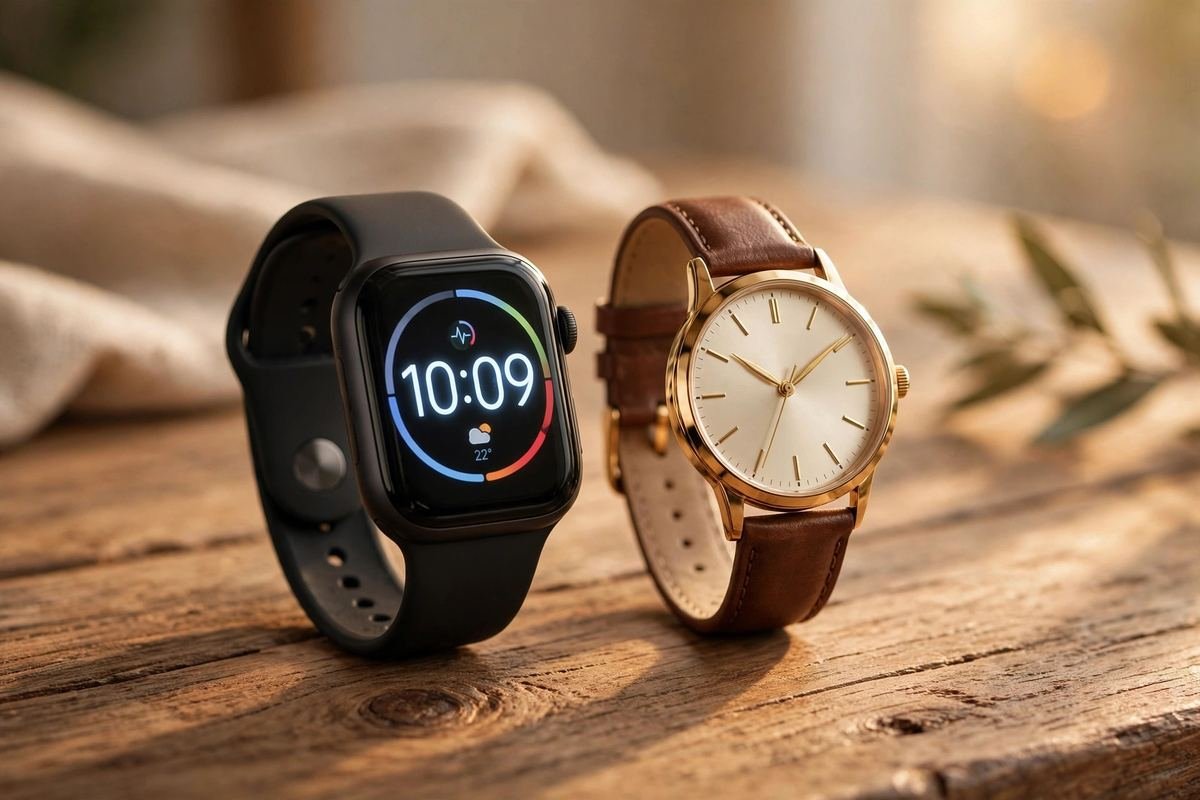
The smartwatch vs traditional watch question divides wristwatch lovers like no other. On one side, a computer for your wrist that tracks your heart, pays for coffee, and buzzes with every message. On the other, a mechanical or quartz timepiece built to outlive you, needing nothing but an occasional battery or a daily wind. Both are legitimate answers, and the right one depends entirely on how you live.
Smartwatch or analog watch? The smartwatch vs traditional watch debate comes down to clear tradeoffs: unmatched health data, notifications, and apps, weighed against nightly charging and a lifespan measured in years. Traditional watch advantages run the opposite way: timeless style, decades of service, and zero charging, weighed against zero smarts. Hybrid watch options like the Withings ScanWatch 2 try to split the difference, hiding sensors inside a classic analog dial.
This guide puts ten real watches head to head, five smart and five traditional, to settle the smartwatch vs traditional watch question with actual products instead of abstractions. We answer should I buy a smartwatch with honest use cases, compare classic watch vs smartwatch style for different occasions, and close with a watch buying decision guide. From All Watch Today, here is everything you need to choose with confidence.
Quick Picks: Smartwatch vs Traditional Watch at a Glance
The five defining picks from each camp. Browse more comparisons in our buying guides and comparisons section.
- Best Smartwatch Overall: Apple Watch Series 10, the benchmark for iPhone users.
- Best Smartwatch for Android: Samsung Galaxy Watch 7, health smarts with classic round style.
- Best Hybrid: Withings ScanWatch 2, analog looks with hidden health sensors.
- Best Traditional Overall: Seiko 5 Sports, the affordable automatic icon.
- Best Traditional Value: Casio G-Shock GA2100, indestructible style under 100 dollars.
How to Choose Between Smartwatch vs Traditional Watch
Start with the role the watch plays in your day. If you want workout tracking, heart health alerts, sleep analysis, and phone free convenience, a smartwatch earns its place immediately and no traditional watch can substitute for it. If you want an accessory that completes an outfit, marks milestones, and never demands a charger, a traditional watch is the answer. Many people eventually own both, wearing the smartwatch for training and the traditional piece for everything else.
Next, weigh the hidden costs honestly. Smartwatches need charging every one to three days, become obsolete as software support ends, and tie you to a phone ecosystem. Traditional watches need a battery every few years for quartz or a service every five to seven years for automatics, but they hold value better and never nag you with notifications. Ask yourself which set of chores you would rather live with, then read our blog for deeper dives into each ownership style.
Match the Watch to Your Phone
The Apple Watch only pairs with iPhone, and it is the obvious choice for Apple users who want the deepest integration. Samsung Galaxy Watches pair with any Android phone but unlock their full health suite on Samsung phones. Garmin and Fitbit work across both platforms with fewer ecosystem lock ins. Traditional watches, of course, pair with nothing and work with everything, which is either their greatest strength or their fatal flaw depending on your view.
Think About Style and Occasion
A traditional watch elevates formal wear in a way no glowing rectangle can match, which is why dress occasions still belong to analog. Smartwatches dominate the gym, the trail, and the busy workday where glanceable information matters. Hybrids bridge the gap for offices with character. Consider where you spend your hours and which wrist presence serves those moments best.
Consider Longevity and Value
A quality traditional watch can last decades and be serviced indefinitely, sometimes becoming an heirloom. A smartwatch is a consumer electronic with a realistic useful life of three to five years before battery decline or software abandonment. Price accordingly: spending 400 dollars on a smartwatch buys temporary utility, while the same money in a traditional watch buys something that may outlive the phone in your pocket.
The 10 Best Smartwatch vs Traditional Watch Picks
Five smartwatches that define the category, followed by five traditional watches that show what analog does best.
1. Apple Watch Series 10
The Apple Watch Series 10 is the smartwatch benchmark for iPhone users, typically 399 dollars for the 46mm aluminum model. It is thinner and lighter than ever, with a brighter wide angle display, sleep apnea detection, and the most polished app ecosystem in wearables. If you carry an iPhone and are weighing smartwatch vs traditional watch options, the decision effectively makes itself.
- Bright wide angle OLED display in thin 42mm and 46mm cases.
- ECG, blood oxygen, and sleep apnea health sensors.
- watchOS with the deepest third party app selection.
- 50 meter water resistance with swim tracking.
Pros: Best in class software and apps, excellent health features, seamless iPhone integration. Cons: Daily charging, iPhone only, and becomes outdated within a few years.
2. Samsung Galaxy Watch 7
The Samsung Galaxy Watch 7 is the best smartwatch for Android users at around 299 dollars. Its Exynos W1000 chip, BioActive health sensor with Energy Score, and dual band GPS deliver flagship tracking in a classic round design with an optional rotating style. For Samsung phone owners especially, it is the complete package.
- Exynos W1000 chip with 32GB storage for smooth Wear OS 5.
- BioActive sensor with Energy Score and sleep coaching.
- Dual band GPS and 5ATM water resistance.
- Sapphire crystal display in 40mm and 44mm sizes.
Pros: Fast and fluid, strong health suite, round classic looks. Cons: Battery lasts a day or two, and top health features need a Samsung phone.
3. Garmin Venu 3
The Garmin Venu 3 is the smartwatch for serious athletes who find Apple and Samsung too casual, selling for 449 dollars. It offers up to 14 days of battery life, advanced training metrics like Body Battery and sleep coaching, and a bright AMOLED display. Runners, cyclists, and triathletes consistently rate Garmin’s training data above the mainstream alternatives.
- Up to 14 days of battery life in smartwatch mode.
- Advanced metrics including Body Battery, HRV status, and training readiness.
- Bright AMOLED display with 5ATM water resistance.
- On device music storage and Garmin Pay.
Pros: Outstanding battery life, best in class training data, works with iPhone and Android. Cons: App ecosystem is thinner, and the design is sporty rather than elegant.
4. Fitbit Sense 2
The Fitbit Sense 2 focuses on stress and wellness at around 299 dollars, with continuous electrodermal activity sensing, ECG, and some of the best sleep tracking in the business. It is lighter and simpler than flagship rivals, with six plus days of battery life. For buyers who want health insight without smartwatch complexity, it hits a sweet spot.
- cEDA sensor for all day stress detection and management.
- ECG and SpO2 health sensors with detailed sleep analysis.
- Six plus days of battery life per charge.
- Lightweight aluminum design with 50 meter water resistance.
Pros: Excellent sleep and stress tracking, long battery life, comfortable and light. Cons: Fewer apps than Apple or Samsung, and some features need a Premium subscription.
5. Withings ScanWatch 2
The Withings ScanWatch 2 is the hybrid that answers smartwatch or analog watch with both, priced at 349 dollars. It looks like a classic analog watch with sapphire glass and real hands, but hides ECG, blood oxygen, sleep apnea detection, and activity tracking inside, with 30 days of battery life. For traditional watch lovers who want health data without a screen, it is revelatory.
- Classic analog design with hidden health sensors.
- ECG, SpO2, and sleep apnea detection.
- 30 day battery life, a month between charges.
- Sapphire glass with 5ATM water resistance.
Pros: Traditional looks with real health tech, month long battery, timeless style. Cons: No apps or notifications beyond basic alerts, and the small digital screen is limited.
6. Seiko 5 Sports SRPE51
The Seiko 5 Sports SRPE is the traditional watch world’s best answer to value, at 200 to 250 dollars. Its in house 4R36 automatic movement, 100 meter water resistance, and versatile 40mm design make it the default first mechanical watch. It will never track your run, but in the smartwatch vs traditional watch longevity debate it will still be ticking decades after today’s smartwatches are e waste.
- Seiko 4R36 automatic with hand winding and hacking.
- 100 meter water resistance with dive style bezel.
- Day date complication.
- Enormous strap and modding community.
Pros: Real mechanical movement, timeless versatility, lasts decades. Cons: No smart features at all, needs regular wear or winding, and drifts seconds daily.
7. Timex Marlin Hand Wound
The Timex Marlin Hand Wound reissue brings 1960s charm for 200 to 250 dollars. Its 34mm gold tone case, domed acrylic crystal, and hand wound mechanical movement are pure vintage romance, the antithesis of everything a smartwatch represents. Buy it for date nights and the daily pleasure of winding a tiny machine.
- Hand wound mechanical movement, 21 jewels.
- 34mm vintage proportioned case with domed acrylic.
- Classic mid century dial design.
- Genuine leather strap.
Pros: Irresistible vintage character, affordable mechanical, perfect dress size. Cons: Tiny by modern standards, acrylic scratches, and manual winding is a daily chore.
8. Citizen Tsuyosa NJ0150
The Citizen Tsuyosa NJ0150 delivers integrated bracelet style with an automatic heart for 450 to 550 dollars. Its textured dial, sapphire crystal, and Miyota automatic movement give it presence that smartwatches cannot imitate. It is the traditional pick for buyers who want modern design language without a single pixel.
- Miyota 8210 automatic with display case back.
- Integrated bracelet with striking textured dials.
- Sapphire crystal and 50 meter water resistance.
- 40mm case with contemporary proportions.
Pros: Head turning design, reliable automatic, sapphire crystal. Cons: No hand winding, modest water resistance, and zero connectivity.
9. Casio G-Shock GA2100
The Casio G-Shock GA2100, the CasiOak, is traditional toughness perfected for about 99 dollars. Its carbon core guard structure, 200 meter water resistance, and slim octagonal profile survive anything while looking sharp. It is the watch you wear when a smartwatch would shatter and a dress watch would weep.
- Carbon core guard shock resistant construction.
- 200 meter water resistance.
- Dual LED light with world time and stopwatch.
- Years of battery life from a single cell.
Pros: Nearly indestructible, iconic design, unbeatable price. Cons: Resin build feels cheap to some, and the display is basic.
10. Orient Kamasu RA-AA0003R19B
The Orient Kamasu closes our list as the traditional diver done right for 220 to 260 dollars. With a sapphire crystal, 200 meter water resistance, and an in house F6922 automatic movement, it offers mechanical credibility and real capability at a price smartwatches cannot match for longevity. It is the watch you buy when you want one honest tool for decades.
- In house F6922 automatic with hand winding and hacking.
- Sapphire crystal with 200 meter water resistance.
- 120 click unidirectional dive bezel.
- Solid link bracelet with signed clasp.
Pros: Sapphire and in house automatic under 260 dollars, true dive specs, timeless style. Cons: No smart features, bracelet could be finer, and servicing costs add up.
Smartwatch vs Traditional Watch: Making Your Decision
Be brutally honest about what you will actually use. If health tracking, notifications, and workout data would genuinely change your routine, a smartwatch like the Apple Watch Series 10 or Garmin Venu 3 pays for itself in utility. If you mostly want to know the time and look good doing it, a traditional watch like the Seiko 5 Sports or Orient Kamasu gives you more lasting satisfaction per dollar. The hybrid Withings ScanWatch 2 exists precisely for buyers torn between the two, and it deserves serious consideration.
Remember that this is not a permanent commitment. Start with whichever camp calls to you, wear it for a year, and let experience guide the next purchase. Many enthusiasts end up with one of each, and that is arguably the correct answer to the whole debate. For perspective on how both categories evolve and hold value, the long form coverage at Hodinkee is essential reading. The best watch is the one you reach for every morning, smart or not.
Frequently Asked Questions
Should I buy a smartwatch or a traditional watch?
If you are torn in the smartwatch vs traditional watch decision, buy a smartwatch if you want health tracking, notifications, and apps integrated into your day, especially for fitness. Buy a traditional watch if you value timeless style, decades of longevity, and freedom from charging. If you are genuinely torn, a hybrid like the Withings ScanWatch 2 gives you health sensors inside a classic analog design, splitting the difference elegantly.
Do smartwatches make traditional watches obsolete?
No. Traditional watch sales remain strong because they serve different needs: style, craftsmanship, longevity, and emotional value that electronics cannot replicate. Smartwatches dominate utility, but a mechanical watch is jewelry, engineering, and heritage in one object. The two categories coexist because they answer different questions.
How long does a smartwatch last compared to a traditional watch?
A smartwatch typically lasts three to five years before battery degradation or ended software support makes it feel old. A quality traditional watch lasts decades with basic care, and automatics can run for generations with periodic servicing. This longevity gap is the strongest rational argument for the traditional side of the smartwatch vs traditional watch debate.
Can I wear a smartwatch with formal clothes?
You can, but a traditional dress watch almost always looks better with formal wear. If you must wear smart daily, choose a model with a metal bracelet or leather band and a minimal watch face to blend in. For weddings, interviews, and black tie events, even an affordable traditional watch like the Timex Marlin outclasses any smartwatch on style.
What is the best hybrid watch?
The Withings ScanWatch 2 is the best hybrid watch for most buyers, combining a genuine analog design with ECG, blood oxygen, sleep apnea detection, and 30 day battery life. It suits traditional watch lovers who want health data without a glowing screen. Alternatives include Garmin’s Vivomove line, but none match the ScanWatch’s classic looks.
Conclusion
The smartwatch vs traditional watch choice comes down to utility versus timelessness, and both are valid. Smartwatches like the Apple Watch Series 10 and Garmin Venu 3 transform how you train and live, while traditional watches like the Seiko 5 Sports and Orient Kamasu reward you with craft that outlasts every gadget.
If fitness data drives your routine, start smart and add an analog piece later for the moments that deserve ceremony. If style and longevity matter more, start traditional and add a tracker only if serious training demands it. Many collectors eventually keep one of each, the perfect resolution to the smartwatch vs traditional watch debate, reaching for the smartwatch on training days and the mechanical on every other day.
Either path leads to a wrist you genuinely enjoy, which is the only metric that truly counts in this hobby. Before you decide, borrow or try both styles for a week if you can, since wrist feel and daily habits reveal more than any spec sheet. Notice which one you reach for on busy mornings, which one survives your workouts, and which one makes you smile in the mirror. The honest answer is the watch you will actually wear, not the one that wins debates online.
