
Quick Picks: First Automatic Watch at a Glance
If you want the short version, these five are the safest first buys in mechanical watches, covering every budget and style.
- Best overall first automatic: Seiko 5 Sports SRPD51K1
- Best budget first automatic: Invicta Pro Diver 8926OB
- Best first dress watch: Orient Bambino Version 2
- Best first Swiss automatic: Tissot PRX Powermatic 80
- Most fun first mechanical: Vostok Amphibia 120656
How to Choose Your First Mechanical Watch
The golden rule for a first automatic watch is simple: buy the best watch for the life you actually live, not the life you imagine. If you wear jeans and a t-shirt daily, a rugged field or dive style watch will get ten times the wrist time of a delicate dress piece. If you work in an office, a clean 38 to 40 mm watch with a simple dial fits under every cuff. Beginners do best with one versatile watch worn constantly, because daily wear keeps the automatic wound and teaches you what you value before watch number two.
Set your accuracy expectations honestly and you will love your watch instead of resenting it. Affordable automatics typically run within 15 to 30 seconds per day, which sounds like a lot until you realize it means setting the time once a week. That is normal and fine. What matters more is consistency and reliability: a watch that gains a steady 10 seconds daily is healthier than one that swings wildly. The best beginner automatic watches on this list all use proven calibers with decades of service history behind them.
Match the Watch to Your Daily Life
Think about water, knocks, and dress codes before falling in love with a dial. A 100 meter water resistant watch survives swimming and rain without thought, while a 30 meter dress watch demands care around water. Larger 42 mm cases suit casual wear and bigger wrists, while 36 to 40 mm works everywhere. For a first automatic watch, versatility beats specialization every time, which is why field watches and dive style watches dominate beginner recommendations. You can always buy the delicate dress piece later when you know your taste.
Understand What the Movement Gives You
Every pick below names its caliber, and beginners should learn the greatest hits. Seiko’s 7S26 and 4R36 are the legendary workhorses, with the 4R36 adding hacking and hand winding. Miyota’s 8215 powers countless microbrands reliably. Orient’s F6724 and F6922 offer in house Japanese engineering with real finishing. The Swiss ETA based Powermatic 80 delivers an 80 hour reserve that embarrasses movements costing five times more. Knowing these names lets you judge any starter watch collection automatics you encounter in the wild.
Set a Budget and Respect It
The sweet spot for a first automatic watch is $150 to $450, where the quality jump over cheaper fashion watches is enormous and the financial risk stays small. Spending less is fine if you choose proven references like the ones below. Spending more is fine too, but only after you have worn a mechanical watch long enough to know your preferences. The classic automatic watch mistakes to avoid all stem from overspending before understanding: buying a $2,000 watch, discovering you hate winding it, and watching it gather dust.
The 10 Best First Automatic Watches
1. Invicta Pro Diver 8926OB
The Invicta Pro Diver 8926OB is the cheapest credible entry into mechanical watches, and a legend among affordable first automatic watches. Inside beats a genuine Seiko NH35A caliber, the same workhorse found in watches costing five times more, with hacking and hand winding. The Submariner inspired 40 mm case offers 200 meter water resistance. At around $100, often less on sale, it lets any beginner experience a real automatic almost risk free.
- Genuine Seiko NH35A automatic caliber
- 200 meter water resistance
- Classic 40 mm dive watch design
- Unbeatable price at around $100
Pros: Real Seiko movement for almost nothing, true dive specs, great beater. Cons: The brand carries stigma among enthusiasts, and the bracelet is basic.
2. Vostok Amphibia 120656
The Vostok Amphibia is the weirdest and most wonderful first automatic watch you can buy. Made in Russia since 1967, its in house 2415B caliber and ingenious case design, where water pressure tightens the crystal seal, give it genuine 200 meter resistance. The 120656 scuba dude dial is pure charm. At around $90, it teaches beginners that mechanical watchmaking exists far beyond Switzerland and Japan.
- In house Vostok 2415B automatic caliber
- 200 meter water resistance with unique case engineering
- Iconic scuba dude dial
- Historic value at around $90
Pros: Incredible history and character, genuine tool watch, almost disposable price. Cons: Crude finishing by modern standards, and the acrylic crystal scratches.
3. Seiko 5 SNK809
The Seiko 5 SNK809 has started more collections than any watch in history, and it remains the benchmark first automatic watch under $200. Its 7S26 caliber is a 21 jewel legend of reliability, the 37 mm military case wears perfectly on almost every wrist, and the day date is genuinely useful. At around $175, it is the watch veteran collectors recommend when a friend asks how to choose your first mechanical watch.
- Legendary Seiko 7S26 automatic caliber
- Perfect 37 mm field watch proportions
- Day date display
- Historic value at around $175
Pros: Perfect size, bulletproof movement, endless strap options. Cons: No hacking or hand winding, and the Hardlex crystal can scratch.
4. Timex M79 Automatic
Timex surprised everyone with the M79 Automatic, a faithful 1970s reissue powered by a Miyota 8215 caliber. The 38 mm case, burgundy and blue bakelite style bezel, and bracelet capture the funky late seventies perfectly. At around $289, it gives beginners a vintage flavored first automatic watch from a brand their grandparents trusted, with modern reliability inside.
- Miyota 8215 automatic caliber
- Faithful 1970s reissue design
- 38 mm case with rotating bezel
- 50 meter water resistance
Pros: Fantastic retro styling, reliable Japanese movement, trusted brand. Cons: Only 50 meter resistance, and the bracelet is just adequate.
5. Orient Bambino Version 2 FAC0000CA0
Every beginner who needs a dress watch should meet the Orient Bambino Version 2. Its domed dial, Roman numerals, and slim hands look like they belong on a watch costing ten times more, while the in house F6724 automatic keeps it honest mechanically. The 40.5 mm case wears elegantly. At around $280, it is the best first self winding watch for office wear and formal occasions.
- In house Orient F6724 automatic caliber
- Beautiful domed vintage style dial
- Elegant 40.5 mm dress case
- Remarkable value at around $280
Pros: Stunning looks for the money, in house movement, perfect dress proportions. Cons: Only 30 meter water resistance, so keep it dry.
6. Seiko 5 Sports SRPD51K1
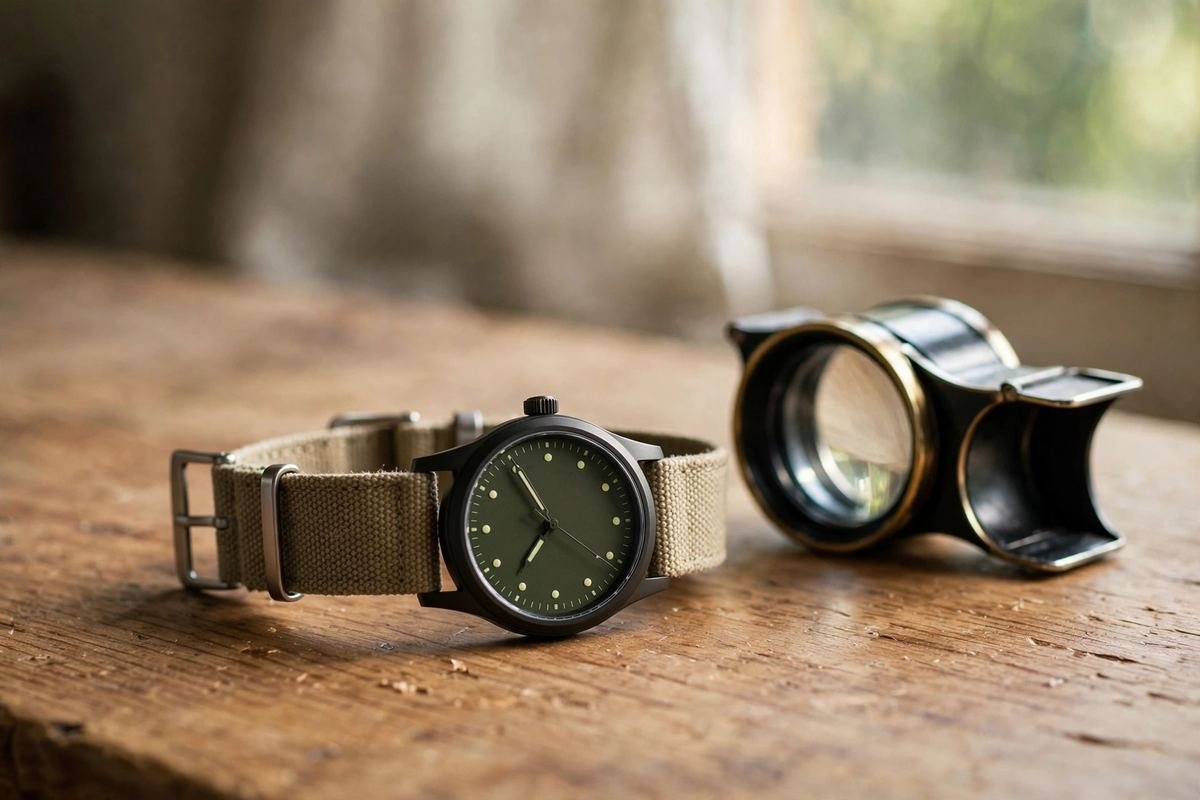
If you buy one watch from this entire list, make it the Seiko 5 Sports SRPD51. The modern heir to the legendary SKX, its 4R36 caliber adds hacking and hand winding to the proven Seiko 5 formula, wrapped in a 42.5 mm case with 100 meter resistance and a rotating bezel. At around $300, it is the default best beginner automatic watch for anyone who wants a single do everything mechanical.
- Seiko 4R36 caliber with hacking and hand winding
- Iconic SKX inspired design
- 100 meter water resistance
- Huge aftermarket strap and mod support
Pros: Does everything well, robust movement, legendary design. Cons: Hardlex crystal, and 42.5 mm is large for small wrists.
7. Orient Kamasu RA-AA0001B19B
The Orient Kamasu is the beginner dive watch for people who read spec sheets. Its F6922 caliber hacks and hand winds, the 41.8 mm case delivers real 200 meter water resistance, and the sapphire crystal embarrasses competitors costing twice as much. The sunburst dials are genuinely beautiful. At around $350, it is the thinking beginner’s first automatic watch.
- In house F6922 caliber with hacking and hand winding
- 200 meter water resistance
- Sapphire crystal
- Superb specs at around $350
Pros: Dive watch specs at a bargain price, sapphire crystal, reliable movement. Cons: The bracelet is merely fine, and availability fluctuates.
8. Citizen Tsuyosa NJ0150-81E
The Citizen Tsuyosa proves a first automatic watch can be fashionable too. Its integrated bracelet design and textured blue dial look straight off a luxury watch, powered by the slim Miyota 8210 automatic visible through the caseback. At around $450, it is the style pick among the best beginner automatic watches, perfect for buyers who want compliments as well as mechanics.
- Miyota 8210 automatic caliber
- Integrated bracelet luxury sports styling
- Striking textured dial
- Exhibition caseback
Pros: Designer looks, reliable movement, great presence. Cons: Only 50 meter resistance, and the integrated bracelet limits strap swaps.
9. Hamilton Khaki Field Automatic H70455533
When a beginner is ready to step into Swiss Made territory, the Hamilton Khaki Field Automatic is the door. Its H-10 caliber delivers an 80 hour power reserve, the 38 mm military case is endlessly versatile, and 100 meter resistance with sapphire crystal means real world toughness. At around $695, it is the finest first automatic watch for buyers who want one watch to keep forever.
- Swiss H-10 caliber with 80 hour reserve
- Classic 38 mm field watch design
- 100 meter water resistance
- Sapphire crystal
Pros: Swiss Made quality, huge reserve, timeless versatility. Cons: The stock strap deserves an upgrade, and it costs twice the Japanese picks.
10. Tissot PRX Powermatic 80 T137.407.11.051.00
The Tissot PRX Powermatic 80 is the first automatic watch that made the whole internet pay attention, and it remains the ultimate stretch pick for beginners. Its 1970s integrated bracelet design, textured dial, and ETA based Powermatic 80 caliber with 80 hour reserve deliver a $2,000 look for around $725. If your budget reaches this far, no beginner buy feels more special.
- Swiss ETA Powermatic 80 caliber, 80 hour reserve
- Iconic integrated bracelet design
- Sapphire crystal, 100 meter resistance
- Remarkable value at around $725
Pros: Stunning design and specs, Swiss Made, huge enthusiast community. Cons: High demand can mean waiting, and bracelet sizing needs tools.
Beginner Buying Mistakes to Avoid
The classic automatic watch mistakes to avoid start with buying fakes or homage watches with unbranded movements that no watchmaker will touch. Stick to the real references on this list or established equivalents. Second, do not buy a watch you cannot comfortably afford to service; a $150 watch needing a $200 service in five years is fine if you know it coming. Third, resist buying three cheap watches instead of one good one. A single $300 Seiko worn daily teaches you more than a drawer of novelties.
Finally, buy the seller as well as the watch. Authorized dealers give full warranties, while established grey market sellers offer real savings with solid return policies. Avoid random marketplace listings for your first automatic watch unless you can verify authenticity. For honest beginner education from true experts, the guides at Hodinkee are the gold standard, and our Automatic and Mechanical Watches category has more starter friendly buying guides.
How to Set and Wind Your First Automatic Watch
Your first automatic watch will probably arrive stopped, which is completely normal, and setting it takes two minutes once you know the routine. Pull the crown out to the last position and move the hands forward, always forward, past 12 until the date changes so you know it is midnight. Then set the correct time and date, push the crown home, and give it 20 to 30 gentle turns to build a starting power reserve. Wear it from there and your wrist will do the rest.
For the first week, treat your new watch like a small science experiment. Note how many seconds it gains or loses per day against your phone, since affordable movements often settle after a few days of continuous wear. If your first automatic watch sits unworn over a long weekend it will run down, so simply wind the crown, reset the time, and put it on. There is no harm in letting it stop. Owners who want the watch ready each morning can buy a winder later, but daily wear is the simplest and most satisfying way to keep it running.
A few habits will keep your first automatic watch happy for decades. Keep it away from strong magnets such as phone chargers and speaker docks, because magnetism is the most common cause of sudden inaccuracy. Rinse it under fresh water after swimming in the sea, wipe the case with a soft cloth, and store it somewhere it will not rattle against other metal. Budget for a full service every five to seven years, and your first mechanical watch will still be ticking long after you have added a second and a third to the collection.
Frequently Asked Questions
How do I choose my first mechanical watch?
Start with your daily life: pick a versatile 38 to 42 mm watch with at least 100 meter water resistance from a proven brand like Seiko, Orient, Citizen, Hamilton, or Tissot. Learning how to choose your first mechanical watch is mostly about honesty regarding wrist size, dress code, and budget. The Seiko 5 Sports or Orient Kamasu on this list are nearly perfect default answers.
Do I need a watch winder for my first automatic?
No. A watch winder is a luxury, not a necessity. If you wear your first automatic watch daily, your wrist keeps it wound. If you let it stop between wears, simply wind the crown twenty turns, set the time, and go. Winders make sense for collectors with many perpetual calendars, not for beginners with one beloved watch.
What are the biggest automatic watch mistakes to avoid?
The big three are buying fakes with unserviceable movements, overspending before knowing your taste, and neglecting service until the watch stops. The automatic watch mistakes to avoid also include setting the date between 9 pm and 3 am on watches without a safety mechanism, and exposing your watch to golf, jackhammers, or strong magnets. Treat it well and it will outlive you.
How do I care for my first automatic watch?
Automatic watch care for beginners is simple: wear it regularly, rinse it after swimming, keep it away from magnets and hard shocks, and wipe it with a soft cloth. Have the water resistance seals checked every couple of years if you swim with it, and plan a full service every five to seven years. That is the entire maintenance program, and it costs less per year than a streaming subscription.
How accurate should my first automatic be?
Expect 15 to 30 seconds per day from affordable first automatic watches, and celebrate if yours does better. Consistency matters more than raw numbers: a steady rate can be regulated closer by any watchmaker for a small fee. Do not chase chronometer specs on a $300 watch. Instead, enjoy the living, breathing character that makes mechanical watches special.
Conclusion
Your first automatic watch should be a teacher, not a trophy. Whether you start with the $100 Invicta Pro Diver, the $300 Seiko 5 Sports, or stretch to the $725 Tissot PRX, you are buying into a hobby measured in decades rather than product cycles. Wear it daily, learn its quirks, service it when the time comes, and let it be the first chapter of a collection that is entirely your own. Welcome to mechanical watches. Most collectors remember their first automatic forever, so choose the one you will love wearing every single day.
